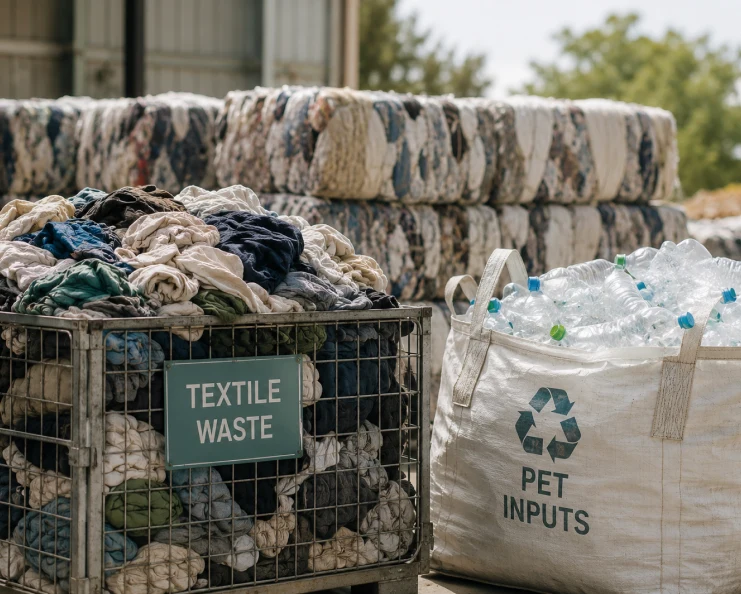
Textile waste and PET inputs are sourced and aggregated.
STEP 02
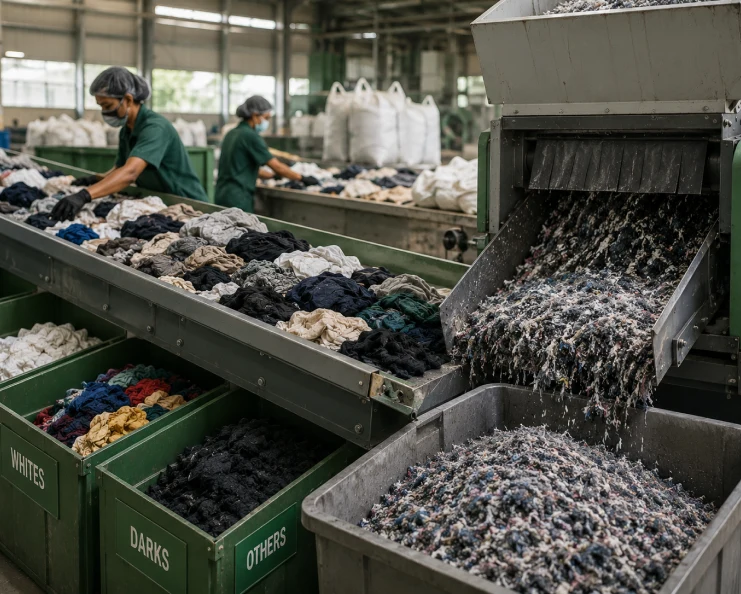
Sorting & Shredding
Materials are sorted by type and colour, then processed into reusable fibre.
STEP 03
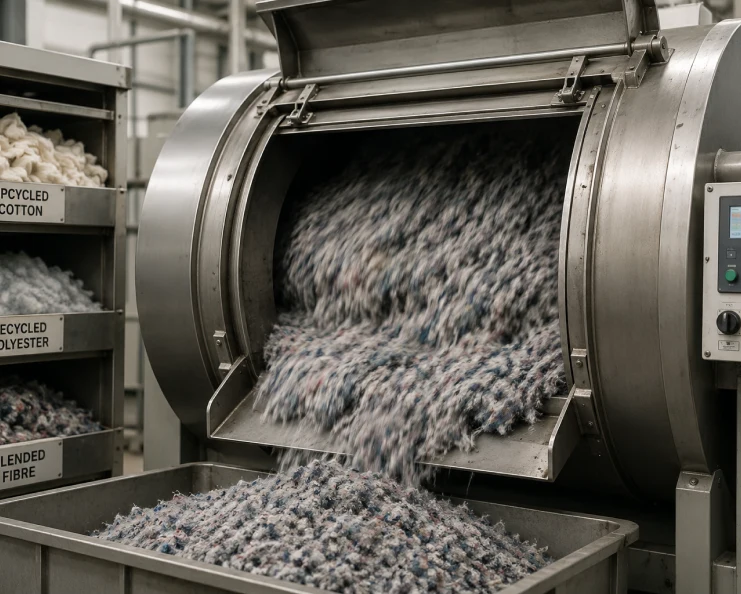
Blending
Fibres are blended to achieve the required composition and shade consistency.
STEP 04
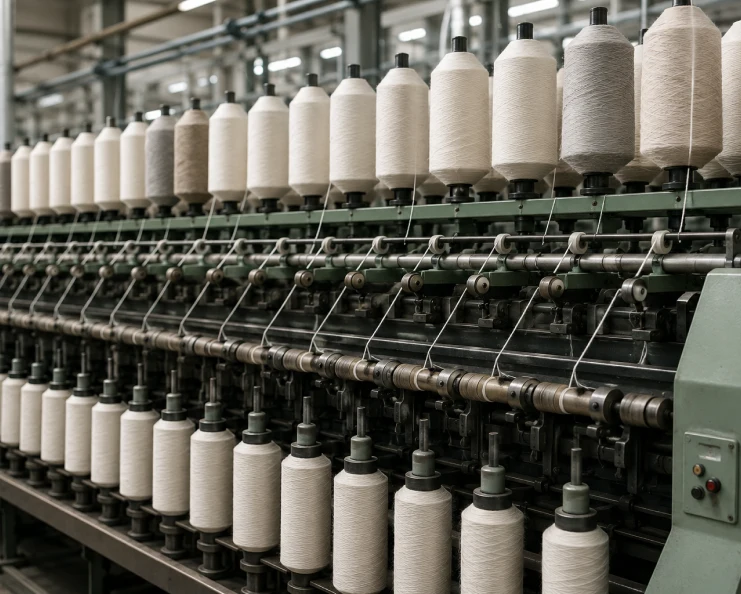
Spinning
Blended fibres are spun into yarn using established spinning systems.
STEP 05
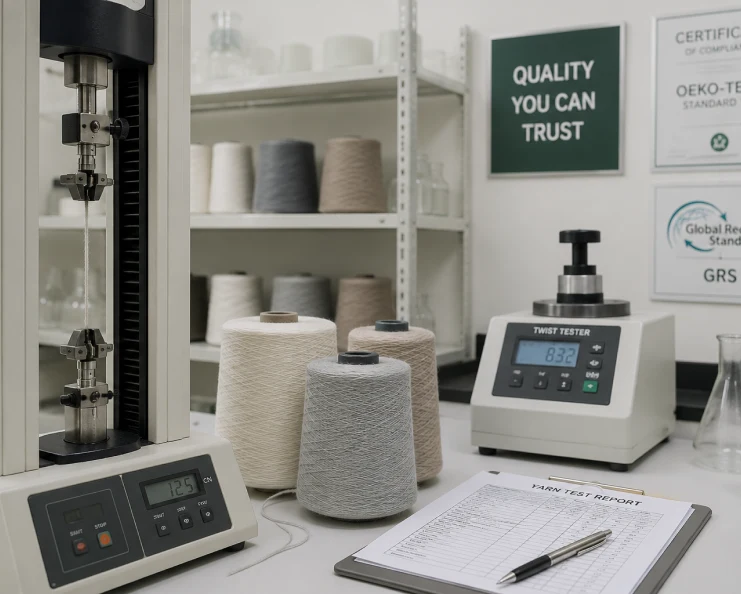
Testing & Certification
Yarn is tested for performance and aligned with required standards and certifications.
STEP 06
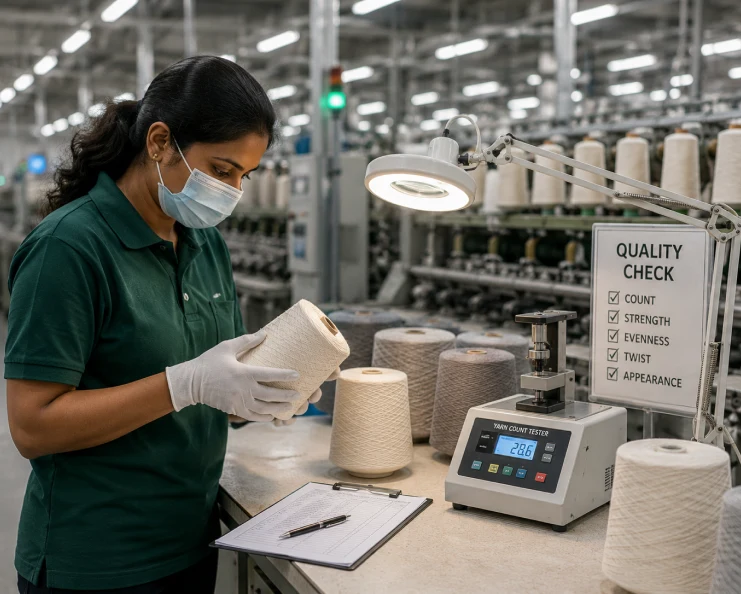
Quality Control
Each batch is monitored to ensure consistency across production runs.
Making of
Upcycled Cotton
Cutting leftovers from garment factories are collected, sorted by color, and transformed into high-quality fiber through our careful processing system.
Color Sorting
Fabric scraps separated by colour
Mechanical Processing
Shredding into fibers while maintaining quality
Quality Verification
Continuous inspection ensures fiber standards
Making of
Recycled Polyester
Used PET bottles are collected, sorted, and transformed into high-performance fiber pellets through mechanical recycling.
Collection & Sorting
PET bottles collected and sorted by type and color
Washing & Shredding
Cleaned and crushed into consistent flakes
Extrusion Process
Melted and formed into fiber-ready pellets
The practical outcomes.
No additional Dyeing
The cotton fibred carries colour from it previous life. Recycled polyester is dope-dyed before blending. This removes one of the most water and chemical intensive steps in textile manufacturing
Established infrastructure
The circular process is built on decades of expertise in the textile industry. Backed by ASM, the parent company, Cirklo can manufacture at a large scale.
Documented and Traceable
From fibre source to finish yarn, the chain is documented. The data is available when you need it for reporting or audits.
Build circular supply chains with Cirklo.
Source recycled yarns, fabrics, and garments, and explore partnership models tailored to your sustainability and sourcing goals.